CHRISTIANS IN MEXICO DEPRIVED OF THEIR HOMES FOR REFUSING TO RENOUNCE THEIR FAITH
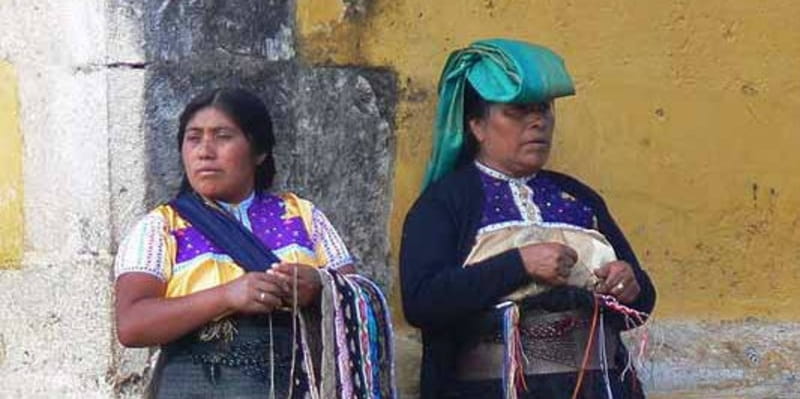
In one of at least three instances of
persecution of Christians in southern
Mexico’s Chiapas state last month,
village leaders reneged on their
agreement to allow 47 evangelicals who
were expelled for their faith to return to
their homes and land.
In accordance with the agreement
arranged by state officials, Protestants
from Buenavista Bahuitz village on Jan.
20 tried to return to their community
after syncretistic Catholics expelled
them in 2012 for their faith. When the
Protestants and Chiapas officials
accompanying them reached Buenavista
Bahuitz, community leaders again
refused entry until the Protestants
convert to Catholicism, according to
advocacy group Christian Solidarity
Worldwide (CSW).
“Traditionalist” Catholics of the village
who practice a blend of Roman
Catholicism and indigenous customs
involving drunken festivals have been at
odds with the Protestant minority for
years. Local authorities who are such
syncretistic Catholics told them they
could come back to their property only if
they became Catholic and took part in
their religious activities, including
paying for the costly celebrations that
involve large amounts of alcohol.
In November those expelled from
Buenavista Bahuitz together with other
forcibly displaced Protestants from
other Chiapas communities protested
their plight with a peaceful sit-in at the
state government building in Tuxtla
Gutierrez, the state capital. After state
government officials gave the
Protestants verbal commitments to
address their concerns, the displaced
ended their month-long action on Dec 1. Chiapas officials had assured the
displaced group that they had
negotiated their return, said Luis
Herrera, director of the Coordination of
Christian Organizations of Chiapas
(COOC), in a CSW statement. The
officials had told the Christians their
freedom of religion would be protected.
But when the Christians and state
officials arrived in the village by bus on
Jan. 20, Buenavista Bahuitz leaders told
the former residents that they must
convert to Catholicism in order to stay.
When surprised state officials then
intervened with the village leaders, the
syncretistic Catholics at last offered to
allow the Christians to stay if they paid
a high fine.
The Christians declined the offer. They
returned to church property in Comitán
de Domínguez, where they’ve lived as
displaced persons for two and half
years. The continued expulsion of the 12
families is among 30 active cases of
faith-based persecution that CSW is
tracking in Chiapas, an analyst from the
organization told the press.
The cases range from early pressure
applied to villagers, such as having
water or electric power cut, to local
authorities denying children the right to
attend school, said the analyst, who
requested anonymity.
Other cases, she said, include removing
Protestants from a government benefits
list. Extreme cases include bans on
worship, forbidding even home prayer
gatherings, destruction of houses and
church buildings and outright
expulsions.
Exacerbating the problem is impunity in
Mexico for religiously motivated crimes.
“We know of almost no cases where
somebody has been prosecuted for
criminal acts in the name of religion,”
she said. “In Mexico, if you commit a
crime, destroy your neighbor’s house,
and you say it was religious, suddenly it
becomes an exempt crime for some
reason, [as if they] can’t touch that.”
The government also has an unhelpful
practice of granting persecuted people
land outside their community for
resettlement; she said this is
tantamount to saying to victims, “We’ll
relocate you rather than deal with the
root issue.”
The roots of the inaction lie in a culture
holding that the majority has the “right”
to decide the faith of the entire
community.
“The government has allowed the
persecution to develop and become
entrenched,” she said. “If the
government doesn’t intervene, it almost
always ends with expulsion.”
Violations of religious freedom and
forced displacement of religious
minorities have been common for
decades in Chiapas, Oaxaca, Guerrero,
Hidalgo and Puebla states, where there
are large indigenous populations,
according to CSW. Local political
bosses or caciques resort to Mexico’s
“Law of Uses and Customs,” which was
designed to keep the government from
interfering with local indigenous
customs but which syncretistic
Catholics use to force evangelicals to
pay for and participate in
“Traditionalist” Catholic rituals.
The Law of Uses and Customs thus has
been used to allow local authorities to
violate, with impunity, religious rights
guaranteed in the Mexican constitution,
CSW noted.
“We continue to call on the state
government to meet its obligations
under Mexican and international law
and urge the federal government to
intervene if the state government is
unable or unwilling to fulfill its
responsibilities,” CSW Chief Executive
Mervyn Thomas said in the statement.
Recent expulsions in Chiapas include
that of 10 Protestants whom leaders of
La Florecilla village in San Cristóbal de
las Casas municipality forced to leave
on Jan. 14 after the Christians refused
to renounce their faith, according to
CSW.
Also in Chiapas, on Jan. 8 about 25
armed, hooded individuals believed to
be caciques reportedly attacked
evangelicals in Las Ollas community in
San Juan Chamula municipality for
refusing to take part in a Virgin of
Guadalupe festival in December.
Although they objected to the drunken
festival on principle, the impoverished
evangelicals reportedly said they were
willing to pay but simply could not
afford the 250 pesos (US$16) per family
that village leaders demanded of them.

No comments:
Post a Comment